
What Are the Best Curtain Options for Large Sliding Doors on the Sunshine Coast?

Expansive glass doors invite beautiful coastal light and gentle breezes into your living space and perfectly blurring the line between indoors and out.
But let's be honest, without the right window coverings, those same wide openings can quickly become a problem and disrupt your comfort, privacy, and energy efficiency.
Selecting the most suitable curtains for your large glass panels is a big decision.
With so many materials, tracking systems, and heading styles available, choosing wisely makes all the difference between a seamless, elegant window and one that’s constantly getting snagged or failing to block the afternoon heat.
It’s easy to overlook how the sheer size of these doors, their orientation to the sun, and daily usage patterns affect the ideal curtain choice.
At Coverings Sunshine Coast, we see these challenges every day, and we've gathered the expert insights you need to choose versatile and stylish window dressings for your glass expanses.
Stylish Solutions for Expansive Glass Doors
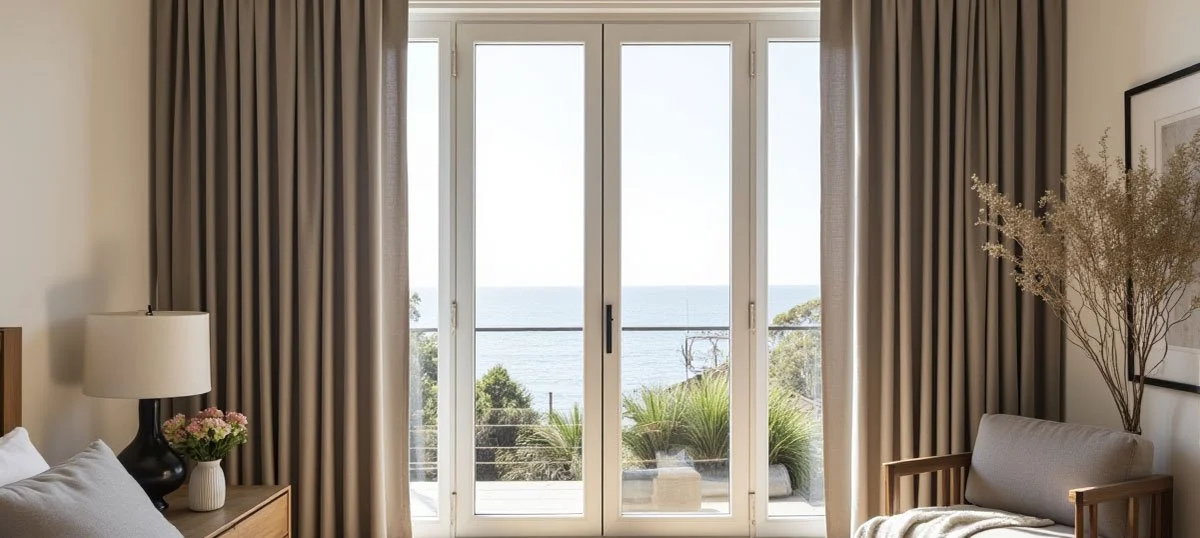
Sheer Elegance
Delicate sheers bring an ethereal touch to open spaces, letting natural brightness flow while offering privacy from the outside world.
Their movement complements ocean breezes, creating a gentle, effortless aesthetic ideal for relaxed Sunshine Coast interiors.
Pros
Diffuses sunlight while maintaining outward views
Enhances sense of space and airiness
Available in linen blends, polyesters, or natural fibres
Ideal for layering with heavier textiles for flexible light control
Works with both ceiling-fitted and recessed tracks
Cons
Limited insulation during cooler months
May require pairing with blockout layers for full privacy
Frequent cleaning is needed in salt-air regions
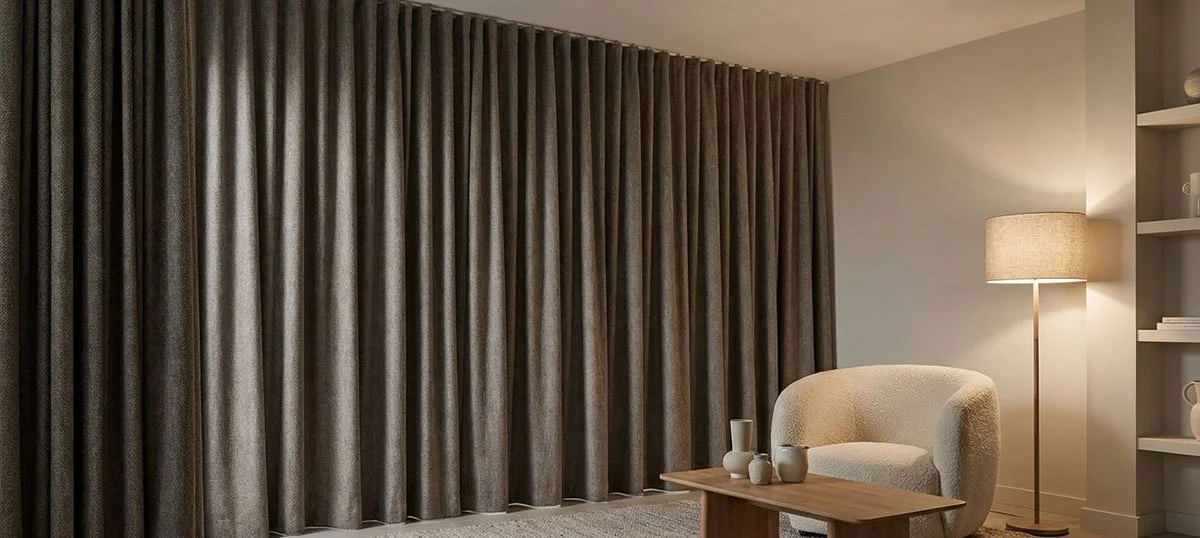
Blockout Layers
Thicker textiles introduce a sense of luxury while controlling brightness and heat. Designed to glide smoothly over wide panels, these treatments assist with energy regulation and nighttime comfort without sacrificing refinement.
Pros
Prevents UV penetration and glare
Improves acoustic insulation for quieter interiors
Reduces indoor heat gain during summer months
Perfect for bedrooms and media areas requiring full darkness
Durable weave resists fading in coastal sunlight
Cons
Bulkier folds may dominate smaller spaces
Requires precise track alignment for effortless operation
Heavier composition means professional installation is advisable
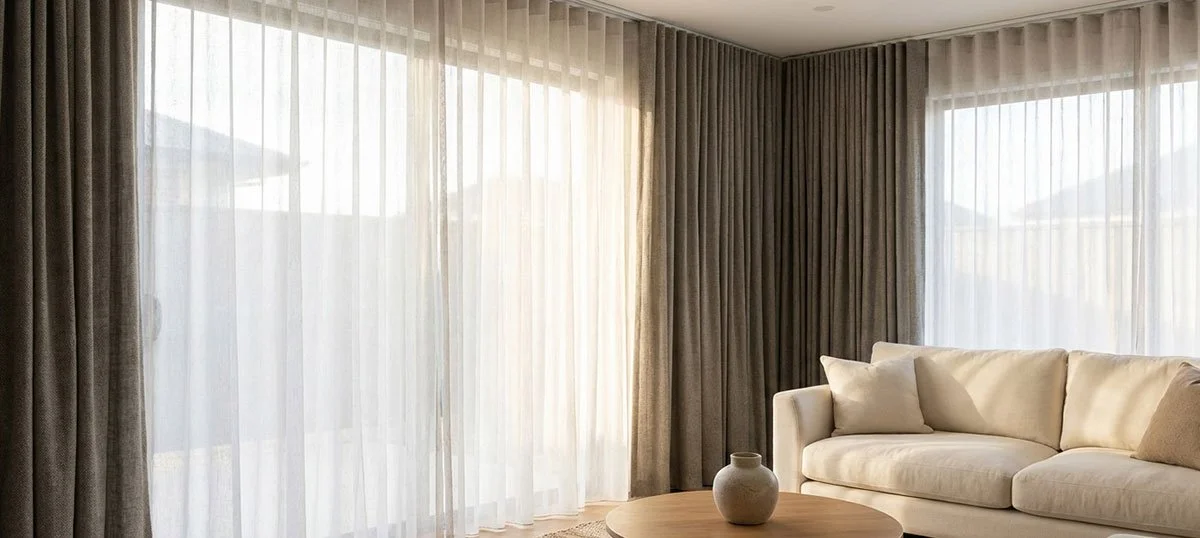
Double Tracking
Combining translucent and opaque materials allows homeowners to adjust lighting levels throughout the day. This setup introduces functional variety, uniting beauty with practicality in high-use zones.
Pros
Offers both soft daylight and total privacy options
Enhances visual depth through texture contrast
Reduces the need for blinds or additional fittings
Streamlines design for continuous floor-to-ceiling coverage
Motorisation compatible for seamless movement
Cons
Slightly higher initial cost due to dual-layer system
More complex track configuration
Extra fabric weight may require structural reinforcement in some installations
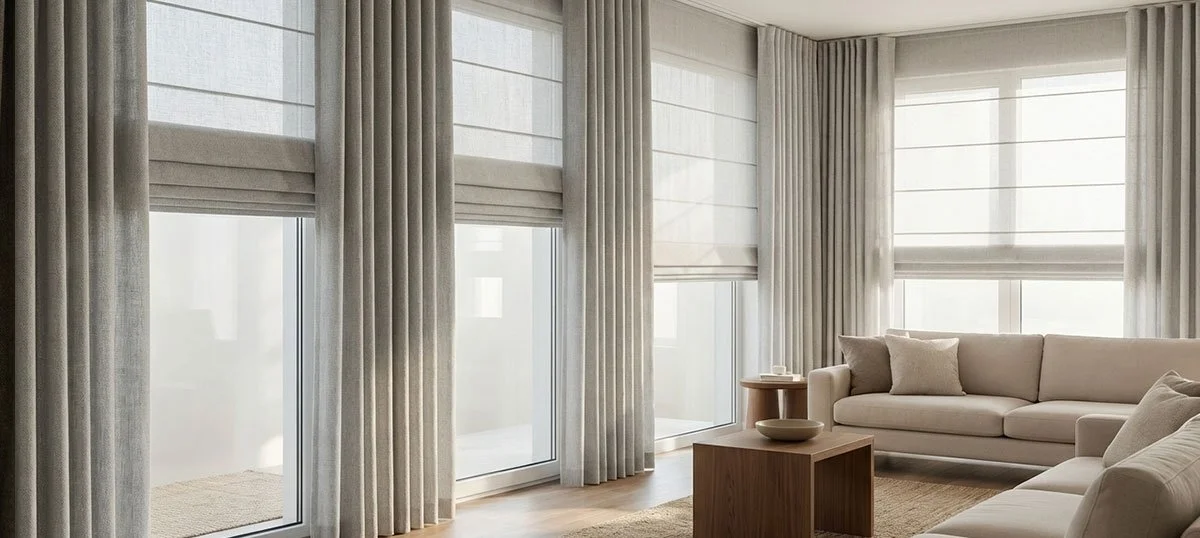
Roman Panels
Roman-style designs combine crisp tailoring with versatile fabric choices, perfect for homeowners wanting elegance without fuss. Their stacked folds create a polished appearance suited to contemporary or classic decors alike.
Pros
Creates defined lines for sophisticated visual appeal
Provides excellent heat and glare control
Easy to coordinate with matching cushions or upholstery
Suitable for various heading styles and mounting systems
Adaptable to automation systems for effortless use
Cons
Bulkier when raised fully above the door
Limited side-stacking capability compared with track systems
Cleaning requires more care to preserve the fold shape
Motorised Systems
Automated solutions offer sleek, user-friendly convenience for high-traffic doorways. Using remote or smart-home integration, residents can adjust shading or open the space instantly with minimal effort.
Pros
Ideal for expansive or hard-to-reach glazing
Enhances accessibility and user comfort
Can integrate with home automation platforms
Smooth, quiet operation reduces fabric wear
Boosts property value through contemporary innovation
Cons
Higher upfront investment
Requires a professional electrical setup
May need ongoing maintenance or battery replacement, depending on configuration
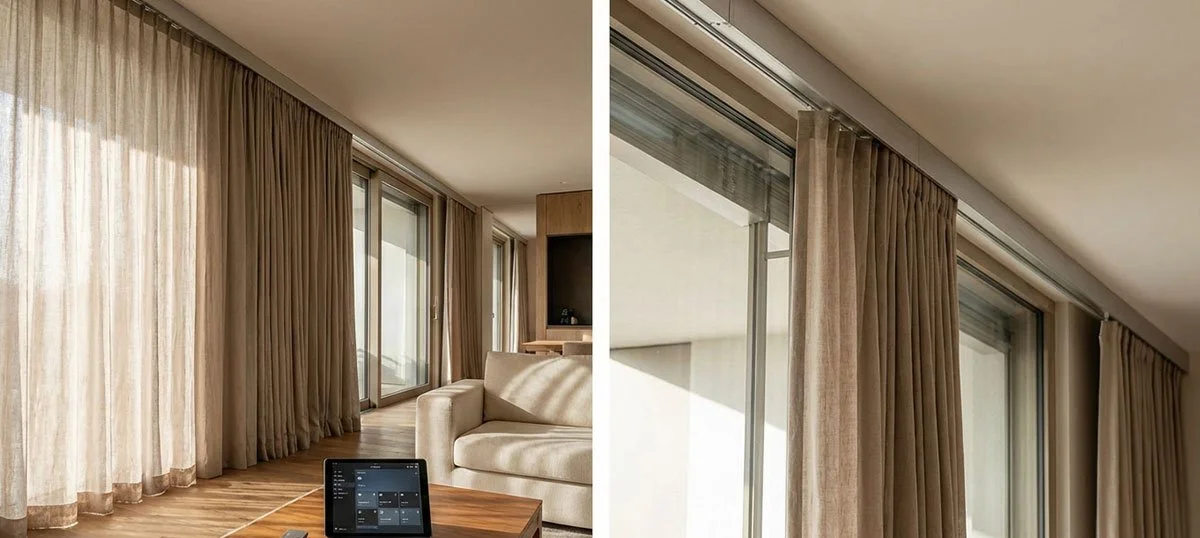
Key Considerations Before Choosing Window Treatments
Light and Privacy Balance
Sunshine Coast living celebrates natural brightness, yet controlling that radiance remains essential for comfort. Rooms exposed to direct sunlight benefit from layered fabrics that diffuse harsh rays without blocking the view.
Combining translucent and opaque textiles allows flexibility — soft light by day, complete seclusion after dark.
Privacy levels differ by location and orientation. Homes facing streets or neighbouring properties may require denser weaves or linings, while elevated or garden-facing rooms can enjoy sheer options.
Fabric Weight and Texture
Material density directly affects drape, motion, and acoustic quality. Lightweight sheers flow gracefully and create softness, whereas heavier textiles offer substantial coverage and insulation.
Selecting an appropriate weight depends on room size, frequency of use, and door dimensions.
Texture contributes equally to atmosphere. Linen blends lend relaxed charm, velvets convey luxury, and synthetics provide durability.
Coastal humidity also plays a part. Breathable fibres handle moisture better than thick synthetics, reducing mildew risk and extending the lifespan of each installation.
Track Configuration and Mounting Style
Hardware determines how smoothly large panels glide. Ceiling-mounted systems emphasise height and continuity, ideal for modern interiors with floor-to-ceiling glass.
Wall-mounted tracks, by contrast, suit retrofit applications where ceiling integration isn’t feasible. Multi-channel systems enable layered arrangements, while curved or recessed fittings accommodate architectural quirks.
Thermal and Acoustic Performance
Window coverings play a surprising role in climate control. Dense weaves and lined fabrics trap air between the textile and glass, forming an insulating barrier that stabilises interior temperature.
During warmer months, this reduces reliance on air conditioning, contributing to energy savings.
Acoustically, thick textiles absorb sound, making open-plan areas feel calmer.
Selecting materials with high GSM (grams per square metre) enhances both temperature regulation and sound absorption, ideal for homes near busy roads or coastal winds.
Maintenance and Longevity
Coastal environments demand resilience. Salt air, sunlight, and humidity can shorten textile life if inferior materials are chosen. High-quality coatings and UV-resistant fibres minimise fading while maintaining fabric integrity over time.
Ease of cleaning also influences satisfaction. Machine-washable sheers simplify upkeep, while delicate or lined curtains may need professional care.
Investing in quality finishes at the start reduces maintenance costs and preserves aesthetic appeal for years.
Budget and Value Over Time
Initial outlay doesn’t always reflect long-term worth. While premium fabrics and motorised systems carry higher upfront costs, they often outperform cheaper alternatives through superior durability and energy efficiency.
Considering both purchase and maintenance expenses provides a clearer picture of total investment.
How Much Will New Curtains Cost?
| Curtain Type | Approximate Price Range (Supply Only) | Notes |
| Sheer Drapery | From $90 – $150 per panel | Ideal for natural light diffusion and coastal airflow. |
| Blockout Styles | From $150 – $300 per panel | Provides insulation, privacy, and light control. |
| Double-Track Systems | From $250 – $450 per setup | Combines sheer and blockout layers for versatility. |
| Roman Designs | From $180 – $350 per unit | Offers structured elegance with varied heading choices. |
| Motorised Options | From $450 – $900+ per opening | Pricing depends on the automation brand and power configuration. |
PLEASE NOTE: Prices reflect supply-only estimates and may adjust with made-to-measure fabrication, installation complexity, or premium textile selections.
Bringing Comfort and Coastal Style Together
Selecting the right curtain design for large sliding doors transforms more than a view — it elevates daily living. From breezy sheers to smart motorised systems, every option brings its own charm and performance advantage.
Takeaways:
Sheer fabrics enhance openness while maintaining privacy.
Blockout materials balance temperature and reduce glare.
Dual-track systems deliver flexibility for changing light conditions.
Roman panels introduce structure and timeless appeal.
Motorised options provide effortless, modern control.
Transform Your Space with Expert Guidance
At Coverings Sunshine Coast, every project is approached with decades of expertise, premium Australian-made quality, and a dedication to flawless results.
Our team helps you avoid costly mistakes by guiding you toward fabrics, fittings, and finishes that complement your lifestyle and environment.
Whether refreshing an existing space or dressing new sliding doors, our personalised service ensures lasting beauty and performance.
Organise your FREE in-home measure, quote and colour consultation today.