
Why Sunshine Coast Airbnb Hosts Are Choosing Curtains Over Blinds (And Why You Should Too)
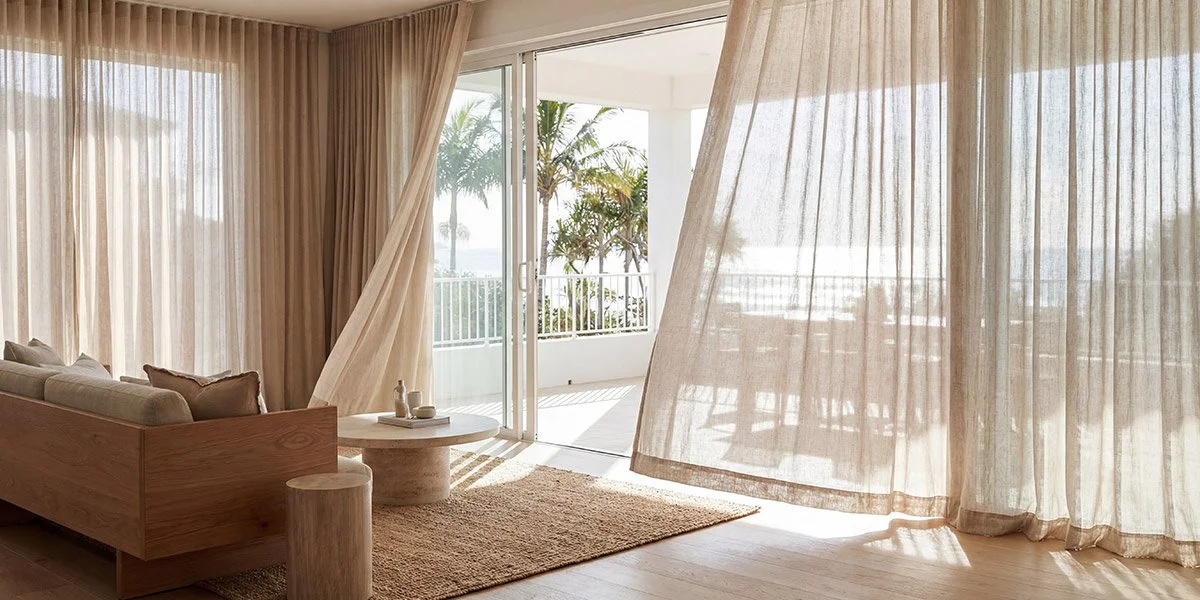
On the Sunshine Coast, a great Airbnb guest review often comes down to the "vibe".
This is that hard-to-define mix of comfort, style, and those thoughtful details that make a stay feel like a true escape.
To help create a winning vibe, local Airbnb hosts are increasingly ditching rigid blinds for the softer, layered look of curtains.
It’s a shift driven by rising guest expectations; in a competitive market like Noosa or Coolum, your interior choices are now a major factor in securing repeat bookings and "Superhost" status.
Short-term rental owners need every design choice to work hard.
Curtains are stepping up as a versatile solution that doesn't just look luxurious—they buffer noise, improve sleep quality with better light control, and instantly make a room feel curated rather than "stock."
In this guide, we’ll explore why curtains are becoming the go-to for Sunshine Coast hosts, including:
The "Luxury" Factor: Why sheers and layered fabrics lead to better listing photos and higher rates.
Guest Comfort: How improved acoustics and light blocking lead to five-star reviews.
Hosting Practicality: Why modern tracking systems make maintenance easier for busy turnarounds.
Understanding Modern Window Treatments on the Sunshine Coast
Window treatments shape light, privacy, temperature, and overall ambience throughout any Airbnb property. This broad category covers solutions hosts use daily to manage guest comfort while keeping upkeep simple.
Common directions include sheers that diffuse sunlight beautifully, blockout panels designed for deep rest, plus layered combinations used to strike a balance between function and elegance.
Many Sunshine Coast properties lean toward bespoke designs because coastal conditions, architectural layouts, and guest expectations differ widely between Noosa apartments and hinterland retreats.
Real-world examples: blockout layers shine in bedrooms with morning glare, while sheers excel in living zones overlooking courtyards or waterways. Coastal humidity also influences fabric choice, making quality materials essential for longevity.
Why Curtains Are Becoming the Go-To Choice for Local Airbnb Hosts
Sunshine Coast hosts are increasingly leaning toward curtains because guest experience now drives booking performance, reviews, and repeat visits.
This shift reflects what owners witness on-site: rooms feel warmer, sleep quality improves, and styling appears more intentional. That combination affects the overall impression guests share online, which directly influences occupancy.
Curtains offer flexibility that blinds struggle to match. Softer fabrics create a welcoming tone inside compact studios, while layered formats tame glare in waterfront apartments without sacrificing style.
Hosts managing north-facing rooms report stronger temperature control through insulated textiles, especially during hotter months when visitors seek restful environments between beach trips.
Curtains vs Blinds: What Hosts Experience Day-to-Day
| Feature / Impact | Curtains | Blinds |
| Guest comfort | Softer feel, stronger ambience, better light diffusion | Functional but often harsher visually |
| Temperature control | Insulated fabrics slow heat transfer in summer | Limited insulation unless specialised |
| Noise reduction | Thick layers absorb sound in busy precincts | Minimal sound buffering |
| Style flexibility | Works across coastal, modern, or luxe interiors | More rigid styling, less warmth |
| Maintenance | Quick refresh between stays | Tracks, slats, and cords need periodic cleaning |
| Coastal resilience | Quality textiles resist humidity when sourced well | Aluminium or PVC may warp or yellow over time |
What’s Pushing Hosts Toward This Alternative
Improved guest rest: Blockout layers reduce early sunrise intrusion common across east-facing holiday spots.
Enhanced visual appeal: Sheers soften architectural edges, lifting photography quality for listings.
Noise control: Thicker textiles help reduce café noise or traffic hum in busy Noosa precincts.
Climate suitability: Materials chosen for humid environments maintain shape better than certain rigid systems.
Design versatility: Works well across properties with angled ceilings, large sliders, or heritage-style windows.
Planning Essentials Before Making Your Window Styling Upgrade
Assessing Room Conditions
Understanding each room’s behaviour throughout the day helps owners avoid missteps. Sun exposure shapes fabric performance, particularly in coastal regions where glare intensifies through summer.
East-facing bedrooms often require stronger light management, while western living zones demand UV-conscious selections to slow fading.
Ventilation patterns also matter, as humid areas near bathrooms or kitchens call for moisture-resistant textiles that maintain structure over time.
Ceiling height influences track choice as well. Higher spaces allow for elegant full-length drapes that elongate rooms visually, whereas compact studios often benefit from streamlined rails that maximise floor area.
Measuring for Precise Fit
Accurate measurements prevent gaps, sagging, or uneven stacking. Window recess depth, architrave shape, and frame condition all determine how well certain installations sit.
Larger sliders need continuous tracking to avoid weight points that pull over time.
Homes with angled ceilings or oversized openings may require custom tracks shaped to suit irregular surfaces — something best handled by specialists familiar with Sunshine Coast architecture.
If choosing layered options, ensure enough clearance for both systems to operate without friction. Overlooking this step leads to bunching, snagging, or reduced light control.
Choosing Materials Suited to Coastal Conditions
Humidity, salt exposure, and temperature fluctuations around Noosa, Coolum, and Peregian Springs all influence material longevity.
Fabrics sourced from premium distributors such as Elliott Clarke, Mokum, Zepel, or Anna Spiro provide durability and style crafted for Australia’s harsher climates.
Consider textiles engineered for fade resistance, mould control, and structural stability. Lightweight sheers complement breezy interiors, while denser weaves add insulation for properties positioned on higher, wind-exposed slopes.
Compliance, Safety, and Local Requirements
Short-term rentals must meet child-safety requirements for window coverings, particularly in family-friendly accommodations. Cordless designs minimise risks for young visitors and satisfy national safety standards.
Hosts can review guidelines at the Australian Competition and Consumer Commission (ACCC) product safety portal.
Building approvals rarely apply to internal treatments; however, heritage-listed properties around older Sunshine Coast precincts may require consultation with the Sunshine Coast Council for aesthetic compliance.
Budgeting and Lifecycle Expectations
Costs vary depending on scale, fabric grade, and customisation. High-quality textiles deliver stronger performance for short-term rentals where daily use, constant movement, and frequent cleaning occur.
Planning for ongoing care extends product life and maintains presentation quality, which influences guest reviews and listing performance.
Before committing, set priorities around ambience, durability, thermal performance, and maintenance load. That clarity shapes smarter investment choices and reduces unexpected expenses down the track.
Common Issues We Fix for Sunshine Coast Hosts
Misjudging Measurements
Incorrect sizing remains one of the most frequent challenges owners encounter. Small discrepancies in width or drop create light leaks, uneven pooling, or awkward stacking that disrupt guest comfort.
Properties with oversized sliders, raked ceilings, or heritage frames need precision; otherwise, hardware never sits cleanly. Many fixes stem from rushed DIY measurements rather than professional assessment.
Using Materials Unsuitable for Coastal Conditions
Sunshine Coast humidity, salty air, and long sun exposure can break down unsuitable textiles quickly. Fabrics not engineered for these environments often stretch, fade, or develop mildew.
Hosts near waterways or surf zones regularly face faster deterioration when lower-grade materials are chosen. Correcting this requires upgrading to climate-ready textiles built for Australian weather.
Ignoring Track Quality and Structural Requirements
Strong fabrics demand equally reliable tracking. Lightweight rails installed on plasterboard or narrow architraves fail under pressure, causing droop or drag.
Large openings — especially in modern coastal homes — benefit from reinforced tracks that distribute weight evenly. Many repairs involve replacing inadequate hardware that was never intended for high-use holiday stays.
Overlooking Safety Standards
Some rental properties still feature outdated corded systems, which do not meet current child-safety rules. Short-term stays often host young families, so meeting national safety guidelines is essential.
Retrofitting safe mechanisms is common, particularly in older homes updated gradually over time.
Choosing Style Without Considering Function
Beautiful fabrics lose their impact if chosen without analysing the room behaviour. Hosts sometimes prioritise looks over performance, leading to glare issues, insufficient privacy, or poor thermal control.
Strong visual concepts work best when paired with practical insights into sun direction, airflow, and guest expectations.
How This Option Stacks Up Against Common Alternatives
Fabric-Based Styling vs Rigid Systems
| Category | Fabric-Based Styling | Rigid Systems |
| Light control | Gentle diffusion, suited to guest comfort | Sharper lines, less atmospheric |
| Noise reduction | Strong due to material density | Minimal absorption |
| Climate response | Performs well with humidity-ready textiles | Susceptible to warping or yellowing near salty air |
| Aesthetic impact | Creates warmth that photographs well | Functional but less inviting |
| Maintenance effort | Quick refresh between stays | Requires detailed cleaning of slats or components |
DIY Installation vs Professional Fit-Out
Certain Airbnb owners attempt installation themselves, yet coastal properties often present architectural quirks that complicate the process.
DIY Approach
Lower upfront spend
Risk of misalignment
Limited structural assessment
Higher chance of returns or re-installs
Professional Fit
Precision measuring suited to unusual frames
Stronger hardware selection for wide sliders
Guidance on climate-resistant materials
Clean, reliable operation appreciated by guests
Lightweight Fabrics vs Layered Configurations
Some hosts prefer a clean, minimal look, while others want deep control over ambience.
Lightweight Styles
Perfect for breezy, coastal interiors
Softens harsh afternoon light
Less insulation
Best for living areas overlooking gardens or courtyards
Layered Configurations
Excellent blockout for guest bedrooms
Strong noise buffering near cafés or busy streets
Greater climate control
Works well in apartments exposed to strong morning sun
Final Thoughts
Creating memorable guest experiences relies on thoughtful design choices that elevate comfort, mood, and practicality.
Key takeaways:
Well-chosen fabrics enhance ambience, sleep quality, and listing appeal
Climate-ready materials outperform rigid systems in humid, salty locations
Accurate measuring and proper track selection prevent common installation issues
Layered formats boost thermal control, privacy, and noise reduction
Professional guidance ensures long-term performance suited to busy rentals
Every Airbnb property carries its own conditions — orientation, climate exposure, guest expectations, and maintenance demands.
Exploring those factors with an experienced specialist ensures each space receives a tailored solution that suits both style and daily use.
Ready to Elevate Your Sunshine Coast Airbnb?
Coverings Sunshine Coast brings decades of experience, meticulous attention to detail, and a curated selection of premium window styling options crafted for coastal living.
Our family-owned team helps homeowners avoid costly missteps by guiding every choice — from fabric selection to installation — with clarity and confidence.
If you’re refining your guest spaces or planning an upgrade, reach out for personalised advice or a free measure and quote.